App Development
App Development Services

At WebSergeons, we specialize in creating innovative and high-performance mobile applications tailored to your business needs. Our team of skilled developers designs apps that are user-friendly, scalable, and secure, helping businesses enhance engagement, improve customer experience, and drive growth. From concept to deployment, we provide end-to-end solutions for both iOS and Android platforms.
Our App Development Services Include:
Custom Mobile App Development
We build apps that are customized to meet your unique business requirements. Our solutions focus on usability, functionality, and seamless performance.iOS App Development
Developing high-quality iPhone and iPad apps with intuitive design, robust architecture, and smooth functionality for Apple users.Android App Development
Creating feature-rich Android apps that run flawlessly across multiple devices and OS versions, maximizing reach and user engagement.Cross-Platform App Development
We leverage advanced frameworks like Flutter and React Native to create apps that work on multiple platforms while saving time and cost.App UI/UX Design
Our designers craft visually appealing and user-friendly interfaces that ensure an engaging user experience and higher retention rates.App Maintenance & Support
We provide ongoing maintenance, updates, and technical support to ensure your app remains secure, fast, and up-to-date.
-
Custom-built solutions -
Intuitive UI/UX experience -
Cross-platform compatibility
-
Scalable architecture -
Long-term business growth -
High performance & security


Get A Free Quotes
Our Other Services
In today’s digital world, gaining online visibility is essential for any business looking to reach new customers and increase revenue. Two of the most popular methods for achieving this are search engine optimization (SEO) and paid advertising (PPC). While both approaches share the same goal—driving traffic to your website—they work in very different ways. So, which strategy should you choose? Or is it better to combine the two?
In this article, we’ll explore the pros and cons of SEO and PPC, how both strategies work, and how they can be integrated into a comprehensive digital marketing strategy.
What is Natural Referencing (SEO)?
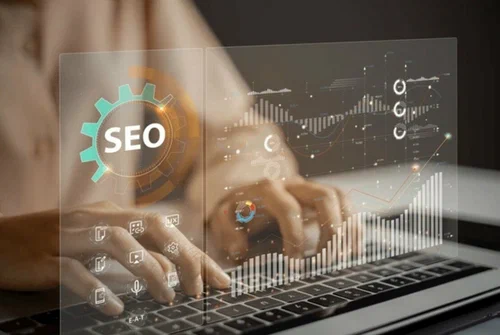
SEO (Search Engine Optimization) is a set of techniques designed to improve a website’s ranking in the organic search results of search engines like Google, Bing, or Yahoo. By optimizing a site for specific keywords, the goal is to make it more visible to Internet users searching for products or services related to the site.
SEO is based on several pillars:
- On-Page Optimization : This includes optimizing title tags, meta descriptions, URLs, content, and images on your site.
- Technical optimization : this concerns the structure of the site, loading speed, security (HTTPS), and mobile adaptability.
- Creating quality content : Relevant, well-written, and regularly updated content is essential for attracting visitors and improving your search ranking.
- Backlinks : Obtaining quality inbound links (backlinks) from other reputable websites helps build your site’s authority in the eyes of search engines.
Benefits of SEO
- Sustainability : One of the main benefits of SEO is its longevity. Once well-ranked, your site will continue to attract organic traffic for a long time, even without additional effort.
- Long-term cost : While the initial setup of SEO can be costly in terms of time and resources, it is generally less expensive in the long run than PPC because you don’t have to pay for every click.
- Credibility : Users tend to trust organic results more than paid ads. Ranking highly in organic results reinforces your business’s perception as an authority in your field.
Disadvantages of SEO
- Time : SEO is a long-term strategy. It can take months to see significant results.
- Constantly changing algorithms : Search engines, especially Google, regularly change their algorithms, which can affect your site’s ranking. This means you need to constantly adjust your SEO strategies to stay competitive.
- Competition : SEO is an ongoing battle. If your competitors invest more in their SEO efforts, they can overtake you in search rankings.
What is Paid Advertising (PPC)?
PPC (Pay-Per-Click) is an online advertising model where advertisers pay each time a user clicks on their ad. PPC ads typically appear at the top of search engine results pages (Google Ads being the most popular platform), as well as on partner websites and social media. Unlike SEO, which relies on organic ranking algorithms, PPC allows you to appear at the top of search results by paying for preferred placements.
Benefits of PPC
- Fast results : Unlike SEO, PPC campaigns can generate traffic immediately after launch. This makes them ideal for short-term promotions or events.
- Precise Targeting : PPC allows for very granular targeting, meaning you can choose precisely who sees your ads based on criteria such as age, location, interests, online behaviors, and more.
- Complete budget control : With PPC, you have complete control over your advertising budget. You can set a daily or global budget, and adjust your bids based on your results in real time.
- Tracking and Analysis : PPC offers highly detailed analytics tools to track campaign performance. You can see exactly how many people clicked on your ads, how many conversions were generated, and adjust your strategy accordingly.
Disadvantages of PPC
- Long-term cost : While PPC can offer quick results, it can be expensive in the long run, especially in competitive industries where keyword bids can reach significant amounts.
- Dependence on paid ads : As soon as you stop paying, your visibility disappears. Unlike SEO, results don’t last after the campaign ends.
- Click-through rate (CTR) : Even if your ads appear at the top of search results, many users deliberately ignore them, preferring to click on organic results.
SEO or PPC: Which Strategy is Best for You?
The answer depends on several factors, including your short- and long-term goals, your budget, and your target market.
Short-term vs. long-term goals
If you’re looking for quick results, PPC is probably the best solution. Whether you’re promoting a seasonal product, running a flash sale, or launching a new event, paid ads offer immediate visibility. SEO, on the other hand, is a long-term strategy. If your goal is to build a sustainable online presence and attract ongoing traffic without paying for each visit, SEO is a better option.
Budget
PPC requires a dedicated advertising budget, especially if you’re in an industry with fierce keyword competition. SEO, while requiring initial investments in content and optimization, can be more cost-effective in the long run because you’re not paying for every visit.
Level of competition
If you’re in a highly competitive industry where the big players already have a strong organic presence, it can be difficult to compete with SEO alone. PPC allows you to bypass this competition by placing you directly at the top of search results.
Combining SEO and PPC: The winning strategy?
Rather than choosing one or the other, why not combine the two? Many businesses have found that a comprehensive digital marketing strategy, incorporating both SEO and PPC, allows them to maximize their online visibility.
Increased overall click-through rate
By combining SEO and PPC, you can occupy more space on search engine results pages (SERPs). By appearing in both paid ads and organic results, you increase your chances of attracting users’ attention.
Keyword testing with PPC to refine your SEO
PPC allows you to quickly test the effectiveness of specific keywords. You can use this data to improve your SEO efforts by focusing on the keywords that generate the most conversions.
Strengthen brand credibility and awareness
By appearing in both paid and organic search results, you build credibility and brand awareness. Users are more likely to trust a business that has a visible and consistent presence.
Conclusion
SEO and PPC are two powerful strategies for driving traffic to your website, but they don’t necessarily have to be mutually exclusive. SEO is a sustainable and cost-effective long-term solution, while PPC offers fast results and precise control over your audience. Depending on your goals and budget, you can opt for either, but the best approach is often a combination of the two.